Quick Summary
A home EV charger works best when the installation is planned around your panel capacity, wiring condition, charger location, and New Jersey code requirements. Hiring a professional EV charger installer helps protect your home from unsafe wiring, overloaded circuits, permit issues, and poor charging performance. With the right setup, you can enjoy safer, faster, and more reliable Level 2 charging that fits your daily driving routine.
Home EV charging can make daily driving simpler, especially when a standard outlet feels too slow for your routine. A Level 2 charger gives faster charging at home, but the setup must match your electrical panel, wiring, charger location, and local New Jersey code requirements. That is where a professional EV charger installer becomes valuable. You get a safer path from planning to installation, with less guesswork around permits, circuit capacity, and long term performance. Before choosing a charger, it helps to understand what proper installation really involves first.
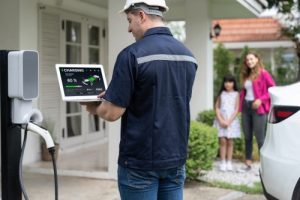
Home EV Charging Is More Than Plugging In a Device
Home charging looks simple from the outside, yet a Level 2 charger asks far more from your electrical system than a phone charger or small appliance. Most Level 2 setups use a 240 volt circuit, which means the charger needs the right wiring, breaker size, grounding, and placement. Your panel must also have enough capacity to support regular charging without putting stress on the rest of the home. Charger location plays a role too, especially when the parking area, cable reach, weather exposure, and wall surface all affect the final setup. A proper installation starts with the home, then matches the charger to that system. That planning helps the charger work with your daily routine, your vehicle, and the electrical demand already inside the house. It also reduces surprise changes once installation begins before any cable, breaker, or charger setting is chosen for everyday use.
A Professional Installer Checks Your Electrical Panel First
Your electrical panel controls how power moves through the home, so it should be reviewed before any EV charger is installed. A professional installer can look at available breaker space, panel age, wiring condition, and the total load already used by major appliances. This step helps identify whether the home can support a Level 2 charger or whether updates are needed first. Without that review, a charger may trip breakers, charge poorly, or strain a panel that was never planned for daily vehicle charging. The right evaluation gives you a clearer path, safer planning, and a setup built around your actual electrical capacity. It can also reveal when a panel change, wiring upgrade, or dedicated circuit is the smarter first move. That information helps you plan cost, timing, and charger performance with more confidence. It also helps you avoid paying for a charger that your current system cannot support safely.
Code, Permits, and Inspections Shape EV Charger Installation in New Jersey
New Jersey home charger installations must follow local electrical code and construction code requirements. When a project involves a new 120 volt or 240 volt outlet, or a direct electrical connection for the charging system, a permit and inspection may be required. Local municipalities can have their own process, so the details can vary from one town to another. A professional installer understands that the paperwork is part of the project, not an afterthought. That guidance helps keep the installation aligned with the rules in your area from the start.
This protects you from preventable delays and installation problems. A permitted and inspected charger gives a clearer record of the work completed at your home. That can help with utility program documents, future home sales, insurance questions, and warranty support. It also helps confirm that the charger was installed with approved materials, correct wiring practices, and proper safety protection. For daily charging, that record adds practical peace of mind too.
Professional Installation Helps Your Charger Perform Better
A home charger should fit the way you drive, park, and use electricity each day. Professional installation helps match charger amperage, circuit capacity, vehicle needs, and home layout before any wiring begins. Placement can affect daily convenience, especially if the charger is installed in a garage, near a driveway, or on an exterior wall. Cable reach, mounting height, weather exposure, and distance from the panel can all influence the final result. When those details are planned correctly, charging feels smooth, predictable, and easier to build into your routine. Better planning also reduces the chance of future changes after the charger is already installed. The right setup can support overnight charging, cleaner cable storage, and easier access when you return home. It also helps your charger deliver the performance your vehicle can actually use. That can make your home charger feel like a true daily upgrade.
DIY Installation Can Create Costly and Unsafe Problems
A charger installation is one area where guessing can become expensive fast. Incorrect wire sizing, weak connections, poor grounding, overloaded circuits, or the wrong breaker can create heat, equipment damage, and safety concerns. A homeowner may also miss permit steps or inspection requirements, which can lead to problems when selling the home or applying for utility incentives. Even small mistakes can affect charger performance and long term reliability. Electrical work near a panel also carries risks that are easy to underestimate, especially when the charger will be used for hours at a time.
You can still make smart choices as the homeowner. You can compare charger features, choose a preferred location, review your driving habits, and ask questions about the installation plan. The electrical work itself should be handled by a qualified professional, so your charger is connected safely and set up for daily use. This is safer for your home, vehicle, and charging equipment.
Get Your Home Ready for Smarter EV Charging
When your EV charger is installed the right way, home charging becomes simpler, safer, and more reliable. The strongest setup starts with a clear look at your panel, wiring, charger location, vehicle needs, and New Jersey requirements. Professional installation helps protect your electrical system from avoidable strain while giving you a charging station that fits your routine. It also gives you cleaner records for permits, inspections, and future questions.
At B-TEC Electric Company, we help New Jersey homeowners plan and install residential EV charging stations with a focus on safety, code, and long term use. We can review your panel, install the proper circuit, complete needed wiring upgrades, and place your charger where it works best. We can also help with related residential electrical work, including panel changes, exterior outlets, lighting repair, fixture installations, and smoke detector installation.
Request a quote, or schedule an appointment for your home EV charger installation project.
FAQs
What does a professional EV charger installer check before installation?
A professional EV charger installer reviews your electrical panel, available breaker space, wiring condition, charger location, and total home power demand. This helps determine whether your home can safely support Level 2 charging. The installer can also identify when a dedicated circuit, wiring upgrade, or panel change may be needed before the charger is installed.
Do I need a permit for home EV charger installation in New Jersey?
In many New Jersey homes, a permit and inspection may be required when a new 120 volt or 240 volt outlet is added, or when the charger is directly connected to the electrical system. Local rules can vary by municipality, so professional guidance helps keep the installation aligned with local code and inspection requirements.
Why should I avoid installing an EV charger myself??
EV charger installation involves high electrical demand, proper wire sizing, grounding, breaker selection, and code compliance. Incorrect installation can lead to tripped breakers, poor charging performance, equipment damage, or safety concerns. A qualified installer gives you a safer setup that supports daily charging and protects your home’s electrical system.