Quick Summary
A handyman can be helpful for many general home-maintenance tasks, but electrical systems require specialized training, testing, and code knowledge. Work involving wiring, circuits, panels, outlets, fixtures, smoke detectors, EV chargers, or recurring electrical faults belongs with a licensed electrician. Choosing the correct professional protects the home from hidden defects, improper materials, overloaded circuits, and repairs that fail after the immediate symptom disappears.
A wobbling ceiling fan can make you look up and wonder whether the problem is minor or something more serious. Is it only out of balance, or is the fan moving because something above the ceiling is loose? That shake can come from blade issues, weak support, poor installation, loose parts, or electrical concerns. Since your ceiling fan sits overhead and connects to your home’s wiring, it should be handled with caution when something feels off.
Let’s look at the top reasons a fan may wobble and the safest next steps for your home.
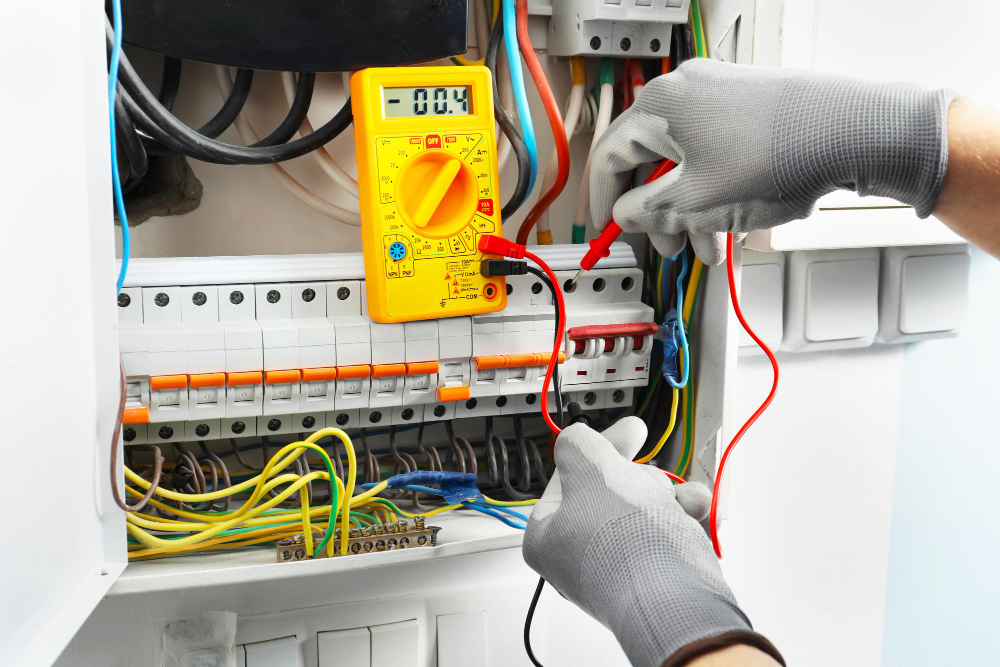
The handyman vs. electrician decision should be based on the type of work, not simply on who is available first. A skilled handyman may handle painting, trim, hardware, minor carpentry, and other general repairs. Electrical work is different because a small visible task can connect directly to concealed wiring, the breaker panel, grounding, and the safety of the entire circuit.
When a project involves permanent wiring or a device connected to the home’s electrical system, a licensed electrician brings the training and diagnostic process needed to complete the work responsibly.
A Handyman and An Electrician Have Different Roles
Handymen are generalists who work across many household tasks. Electricians specialize in electrical theory, circuits, wiring methods, load calculations, protective devices, testing, and code requirements. That narrower focus matters because electrical defects can remain invisible after the wall is closed or the power appears to be restored.
Can a Handyman Do Electrical Work?
The answer depends on the exact task, licensing rules, and local requirements. Replacing a light bulb is not the same as modifying a circuit. Homeowners should not assume that general repair experience qualifies someone to install wiring, alter a panel, add outlets, or troubleshoot recurring electrical faults. Ask directly about the person’s electrical license and the scope of work they are legally and technically prepared to perform.
Licensing and Accountability Matter
A licensed electrical contractor works within a defined professional scope and is accountable for the electrical work performed. Depending on the project, permits and inspections may also be part of the process. That structure gives homeowners a clearer path for documentation, corrections, and questions than an informal arrangement with someone who is not authorized to perform the work.
Licensed Electricians Train for Electrical Hazards
A professional electrician learns how to identify shock hazards, overheating, poor grounding, damaged insulation, incorrect wire sizes, loose connections, and overloaded circuits. Safe work also depends on proper shutdown, verification, personal protective practices, and testing after the repair is complete.
Electrical Troubleshooting Requires More Than Guesswork
A dead outlet may result from a failed device, a tripped GFCI elsewhere, a loose splice, a damaged conductor, or a breaker problem. Replacing parts one at a time can waste money and leave the actual defect in place. Electricians use meters, circuit tracing, and a structured process to isolate the cause.
Panels, Breakers, and New Circuits Need a Specialist
The electrical panel distributes power throughout the house and contains components that can remain energized even when individual breakers are switched off. Panel changes, fuse box upgrades, circuit breaker repair, dedicated circuits, and rewiring should be handled by a licensed professional who understands capacity, compatibility, and safe working procedures.
Outlet Work Can Affect the Entire Circuit
An outlet that appears simple may be part of a longer circuit serving several rooms. Professional electrical outlet installation accounts for grounding, box condition, conductor placement, circuit load, and the need for GFCI or other protective devices in specific locations.
Fixtures Need Proper Wiring and Structural Support
Light fixtures vary in weight, mounting method, heat output, and electrical requirements. Licensed fixture installation services can address damaged boxes, old wiring, inadequate support, and circuit concerns before the new light is energized. This is especially important for chandeliers, ceiling fans, vanity lighting, and exterior fixtures.
Specialized Installations Need Planning
EV chargers, air-conditioning connections, smoke detectors, home additions, and remodels can require new circuits, panel evaluation, permits, or coordination with other trades. An electrician can plan the route, materials, capacity, and sequence before work begins, reducing the risk of costly changes later.
For example, professional smoke detector installation may involve interconnected hardwired alarms, backup power, placement requirements, and testing across several levels of the home. It is not merely a matter of attaching a battery-operated device to the ceiling.
Shortcuts Can Become Expensive Later
Improper splices, overloaded circuits, unsupported fixtures, reversed polarity, loose terminals, and mismatched breakers may not fail immediately. Problems can appear months later as flickering, heat, nuisance trips, damaged equipment, or fire risk. Correcting concealed work often costs more than having the project completed properly from the beginning.
A Clear Scope Helps You Compare Professionals
Before hiring anyone, describe the problem or project in detail and ask who will perform the work. When comparing electrical contractors, NJ homeowners should confirm licensing and insurance, request a written scope, and ask how unexpected conditions will be handled. The lowest price is difficult to compare when one estimate includes testing, proper materials, and code-aware work while another covers only a quick visible fix.
Trust B-Tec Electric Co. LLC With Your Home
A search for electrical contractors in New Jersey can produce a long list. B-Tec Electric Co. LLC gives homeowners a focused residential option backed by veteran ownership, friendly service, practical explanations, and more than 30 years of experience.
Call us to request a quote or schedule an appointment for wiring, panels, outlets, lighting, smoke detectors, and other approved residential services.
FAQs
Can a handyman replace an electrical outlet?
Because an outlet is part of permanent wiring, the safest choice is a licensed electrician who can inspect the box, wiring, grounding, circuit protection, and surrounding devices rather than replacing only the visible receptacle.
Should I hire an electrician to install a ceiling fan?
Yes, especially when a new box, wiring, switch, or fan-rated support is needed. A standard light-fixture box may not be designed to carry the movement and weight of a ceiling fan.
How do I verify that someone is qualified for electrical work?
Ask for the applicable electrical license, proof of insurance, residential experience, and a written explanation of the work. You can also ask who will obtain permits or coordinate inspections when the project requires them. A qualified professional should be willing to explain the repair, identify the materials being installed, and answer questions without relying on vague promises or rushing you into an unclear decision.