Electric vehicles have become a defining part of modern transportation. As more homeowners switch to electric cars, the demand for convenient and efficient home charging solutions continues to grow.
Before you install an electric vehicle charging station in your home, there are several important considerations to make. Each factor, from wiring and panel capacity to charger type and location, plays a major role in how smoothly your charging system will perform for years to come.
At B-Tec Electric Co. LLC, we’ve seen how the right preparation can make all the difference. As a veteran-owned company with years of residential electrical experience, we help homeowners achieve safe and reliable EV charger installations designed to fit their homes and lifestyles.
Assessing Electrical Capacity
Understanding your home’s electrical capacity is critical before adding an EV charging station. Most residential chargers, particularly Level 2 units, require a 240-volt outlet and a dedicated circuit. These setups draw considerable power, often ranging from 30 to 50 amps, depending on the vehicle and charger model.
If your electrical panel is already close to full capacity, an upgrade may be needed to safely support a new circuit. Homes with outdated fuse boxes or older wiring may also require modernization to meet current electrical standards. A licensed electrician can evaluate your panel’s load, wiring condition, and breaker setup to determine what adjustments are necessary.
Taking the time to assess capacity before installation prevents issues like tripped breakers, power interruptions, or overheating circuits. It also helps extend the life of your charging equipment and ensures your system complies with local electrical codes.
Choosing Between Level 1 and Level 2 Chargers
Electric vehicle chargers typically fall into two main categories: Level 1 and Level 2. Differences include charging speed, power requirements, and installation complexity.
Level 1 charger uses a regular 120-volt household outlet and often comes included with your vehicle. It’s easy to use but charges slowly, adding roughly four to five miles of range per hour. This option works well for short commutes or plug-in hybrids, though it’s less convenient for long-range electric vehicles
Level 1 charging is often suitable for overnight charging if daily mileage is low, and it requires minimal installation effort or modifications to your home’s electrical system. This makes it an accessible choice for many first-time EV owners.
Level 2 chargers, on the other hand, operate on a 240-volt circuit. They deliver a much faster charge, often replenishing 20 to 30 miles of range per hour. Because of their higher power draw, they require professional installation. Many homeowners choose this option for convenience, as it allows overnight charging without concern about running out of range.
While Level 1 works for lighter use, Level 2 delivers convenience, efficiency, and long-term usability, especially as EV technology evolves and battery capacities increase.
Location and Accessibility of the Charging Station
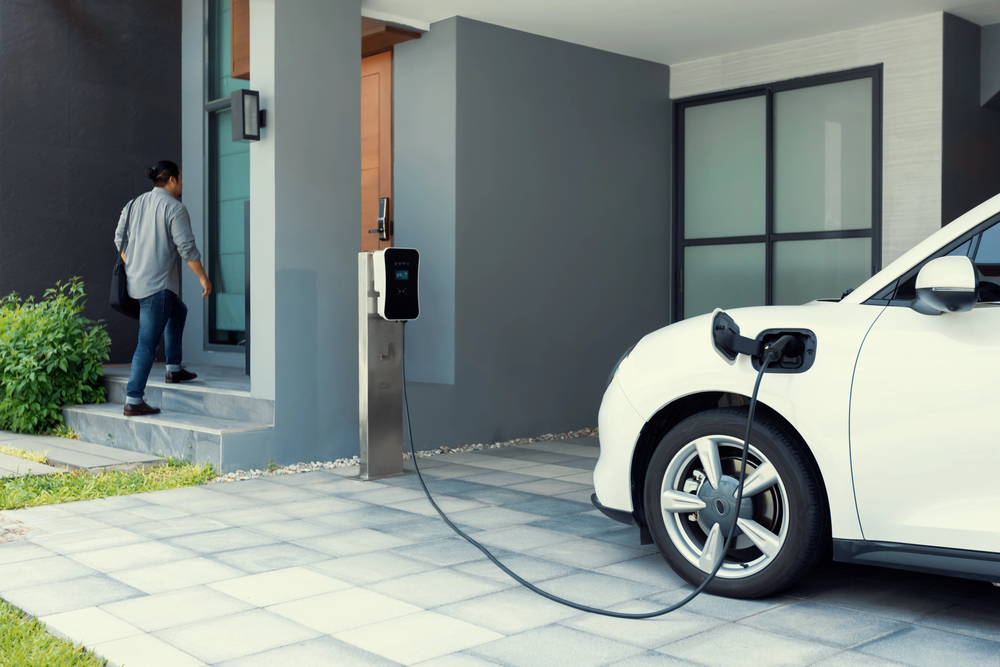
Choosing the ideal location for your EV charger is essential. Position it close to where the vehicle is parked most often, whether in a garage or driveway. Proximity to the electrical panel simplifies wiring and reduces costs.
Outdoor installations should include weatherproof housing to protect against moisture, dust, and temperature fluctuations. A covered area, such as a carport or enclosed garage, adds further protection and usability in all conditions.
Cable management and reach are also important. The charger’s cord should comfortably reach the vehicle’s charging port without stretching or creating hazards. Some homeowners mount the charger on a wall or pedestal for organization and convenience.
Planning the location with adequate lighting improves safety during nighttime use. On the other hand, leaving enough clearance around the charger allows easy vehicle access and future upgrades. Proper positioning also minimizes wear on cords and connectors, helping the charger last longer and operate efficiently.
Understanding Permits and Local Regulations
Installing an EV charging station requires compliance with permits and local building codes. Requirements vary by location, but most jurisdictions mandate a licensed electrician for installation.
Permits cover aspects like electrical load, circuit protection, and adherence to safety standards. An inspection may confirm the installation meets both national and local codes. These steps protect your home from potential hazards associated with improper wiring or inadequate grounding.
At B-Tec Electric Co. LLC, we handle permits and code compliance as part of every installation. This approach meets all legal requirements while relieving homeowners of paperwork and inspection stress.
Following regulations safeguards safety, performance, and peace of mind. A permitted installation guarantees reliable operation without voiding warranties or homeowner insurance coverage.
Evaluating Wiring, Breakers, and Panel Upgrades
Once the charger type and location are determined, reviewing the home’s wiring and breaker system is next. Older homes may not have infrastructure compatible with high-powered charging equipment.
Level 2 chargers often require a dedicated 240-volt circuit with its own breaker to avoid interference with other appliances. Homes with older wiring may need upgrades to improve safety and efficiency.
If the panel lacks available slots, a full upgrade or sub-panel installation might be necessary. These changes support future electrical needs, including additional EV chargers, expanded appliances, or integration with home automation systems. Proper planning also reduces the risk of overloading circuits or causing voltage fluctuations that could affect sensitive electronics.
Professional evaluation identifies potential weaknesses and designs a system to handle current and future energy demands. B-Tec Electric Co. LLC frequently assists with wiring improvements and breaker installations to prepare homes for modern electrical technology.
Considering Future-Proofing and Scalability
As EV adoption grows, planning for the future is wise. A future-proofed system prevents another major upgrade when adding a second EV or faster charger. Wiring and circuits rated for higher amperage than currently needed provide flexibility for future chargers. Smart features, including Wi-Fi controls and energy monitoring, allow users to schedule charging and integrate renewable energy systems such as solar panels.
Scalable installations maintain safety and efficiency while allowing growth, saving money and effort in the long term. Homeowners can also design their systems to accommodate emerging technologies, such as vehicle-to-home (V2H) energy storage or ultra-fast DC charging units.
Considering additional circuit space and conduit pathways during initial installation reduces disruption later and allows for multiple chargers if the household grows. Energy management systems can optimize charging times based on utility rates or renewable energy availability, further increasing efficiency.
Estimating Installation Costs and Incentives
The total cost of installing an EV charger varies depending on several factors, including charger type, location, electrical panel upgrades, and labor rates. On average, homeowners can expect installation costs to range between $800 and $2,000 for a typical Level 2 system.
Costs increase if the installation requires significant wiring upgrades, trenching, or outdoor weatherproofing. However, investing in professional installation pays off through safety, reliability, and long-term performance.
Many regions also offer rebates or tax incentives for installing EV chargers at home. These programs can significantly reduce out-of-pocket costs and make the switch to electric vehicles even more attractive. Some utility companies provide rebates for both equipment and installation, while others offer reduced rates for EV charging during off-peak hours.
Working With a Licensed and Experienced Electrician
While some homeowners may be tempted to install an EV charger themselves, this is one project best left to professionals. Installing high-voltage equipment requires experience, certification, and a deep understanding of electrical safety codes.
Licensed electricians not only handle the physical installation but also assess the electrical panel, verify compatibility, and confirm grounding integrity. They also ensure all components are properly rated for the system’s voltage and amperage.
At B-Tec Electric Co. LLC, our electricians bring both technical expertise and a customer-first approach to every project. We understand that installing an EV charging station is a major step toward embracing sustainable living. Our team works closely with homeowners to deliver safe, code-compliant installations that support both performance and longevity.
When you work with a qualified professional, you gain peace of mind knowing your system is installed correctly, tested thoroughly, and built to last.
Why It’s Worth the Investment
Adding a home charging station completely changes the way you experience electric vehicle ownership. It eliminates the uncertainty of finding a public charger or waiting for a spot to free up.
Instead, you can simply plug in your car when you get home and wake up to a fully charged battery every morning. This convenience alone makes daily driving smoother, especially for those with busy schedules or unpredictable commutes.
The benefits extend far beyond convenience. A professionally installed charging station adds tangible value to your property. As electric vehicles become more mainstream, homebuyers are actively looking for residences equipped with EV charging capabilities. Having one already installed signals that your home is modern, energy-efficient, and ready for the future. This feature can set your property apart in the real estate market, making it a smart long-term investment.
Financially, a home charging setup can also help reduce operating costs over time. Public charging stations often include service fees or higher per-kilowatt-hour rates, while charging at home allows you to take advantage of lower residential electricity rates. Some utilities even offer special time-of-use plans that let you charge during off-peak hours for additional savings.
Beyond financial and practical benefits, there’s a positive environmental impact as well. Charging at home using efficient energy systems reduces your reliance on fossil fuels and lowers greenhouse gas emissions.
If your household also uses renewable energy sources such as solar panels, your vehicle becomes nearly emission-free from power generation to operation. This small shift supports broader sustainability goals and encourages the transition toward cleaner transportation.
Ultimately, installing a home charging station is more than a convenience upgrade; it’s a commitment to long-term value, energy independence, and environmental responsibility. It reflects a lifestyle choice that combines practicality with purpose, which presents comfort, savings, and a cleaner way to move forward.
Common Challenges Homeowners Face
While installing an EV charger offers numerous advantages, it’s not always a straightforward project. Homeowners often face a few obstacles that can affect both the timeline and cost of installation.
One of the most common challenges involves limited electrical panel capacity. Many older homes were not designed with today’s energy demands in mind, meaning the panel may not have enough available circuits or amperage to accommodate a new Level 2 charger. This often requires a panel upgrade or the addition of a subpanel to safely handle the extra load.
Outdated wiring can also pose difficulties. Wires that have aged or don’t meet current standards may not be able to support the voltage or current an EV charger needs. In these cases, rewiring sections of the home or upgrading the breaker system becomes necessary. While this adds to the project scope, it’s also a valuable safety improvement that benefits the entire electrical system.
Parking layout is another consideration that can complicate installation. If the preferred parking area is far from the main electrical panel, running conduit and wiring to that location can increase costs and complexity. Driveways, concrete walls, or finished basements can all make cable routing more difficult, especially for outdoor setups that require weatherproof enclosures and conduit protection.
Beyond technical issues, there are also procedural challenges. Some homeowners encounter delays due to permitting requirements or local inspection processes. Regulations vary by municipality, and obtaining approval may take longer than expected, particularly in neighborhoods with strict building codes or homeowners’ associations.
Despite these potential hurdles, they’re manageable with proper planning and professional assistance. A licensed electrician can assess your home’s setup before installation begins, anticipate issues, and offer solutions that fit your needs and budget. They can also handle permit submissions, code compliance, and safety testing – streamlining the entire process.
Maintaining and Caring for Your EV Charger
After installation, regular maintenance helps keep your EV charger operating safely and efficiently. Inspect cords, connectors, and outlets periodically for wear or damage. Keep the charging area clean and free from debris.
If you have a smart charger, monitor its performance through the mobile app to track charging patterns and spot potential issues early. In outdoor setups, check the weatherproof casing and covers to make sure they remain sealed.
Routine maintenance not only prolongs your charger’s lifespan but also keeps your energy use predictable and efficient. If you ever notice unusual noises, overheating, or inconsistent charging, reach out to a qualified electrician for inspection or repair.
The Role of Safe Electrical Practices
Safety is the cornerstone of every reliable electrical installation. Improper wiring, overloading circuits, or neglecting grounding can lead to serious hazards like electrical fires or equipment damage. Following proper electrical practices ensures your system functions safely for years to come.
Working with an experienced electrician means your system will be installed with high-quality materials, tested for load stability, and inspected for compliance. It’s not just about meeting code—it’s about protecting your home and family.
For B-Tec Electric Co. LLC, safety and quality go hand in hand. Our veteran-owned team applies decades of experience and a commitment to precision in every project we complete.
Installing an EV charging station at home is more than a convenience—it’s an investment in sustainability, comfort, and future-ready living. By understanding key factors like electrical capacity, location, permits, and long-term planning, you can build a system that delivers lasting value.
At B-Tec Electric Co. LLC, we take pride in helping homeowners make confident transitions to electric driving. With our experience, technical skill, and dedication to safe, high-quality work, we make the process simple and dependable from start to finish.
If you’re ready to install an electric vehicle charging station at home, contact us today to request a quote or schedule an appointment. Together, we will create an installation that perfectly matches your home and lifestyle. At B-Tec Electric Co. LLC, we take pride in doing nice work for nice people.