Quick Summary
A noisy ceiling fan can come from loose blade hardware, unbalanced blades, dust buildup, a weak ceiling mount, loose light kits, pull chains, wall control issues, motor wear, or wiring and capacitor concerns. Each sound can point to a different repair need, so paying attention to clicking, rattling, humming, grinding, or wobbling helps you understand the safest next step. Since ceiling fans combine overhead support with electrical parts, professional inspection is the best path when the noise continues or feels unsafe.
Ever turn on your ceiling fan and hear a sound that makes you pause? A noisy ceiling fan can be annoying, but it can also be a helpful warning sign when something is loose, unbalanced, worn, or wired incorrectly. Clicking, rattling, humming, grinding, and wobbling usually point to different causes. Some issues may involve visible parts, while others may involve the mount, motor, control, or wiring. Knowing what each sound may mean helps you make a safer decision before the problem gets worse.
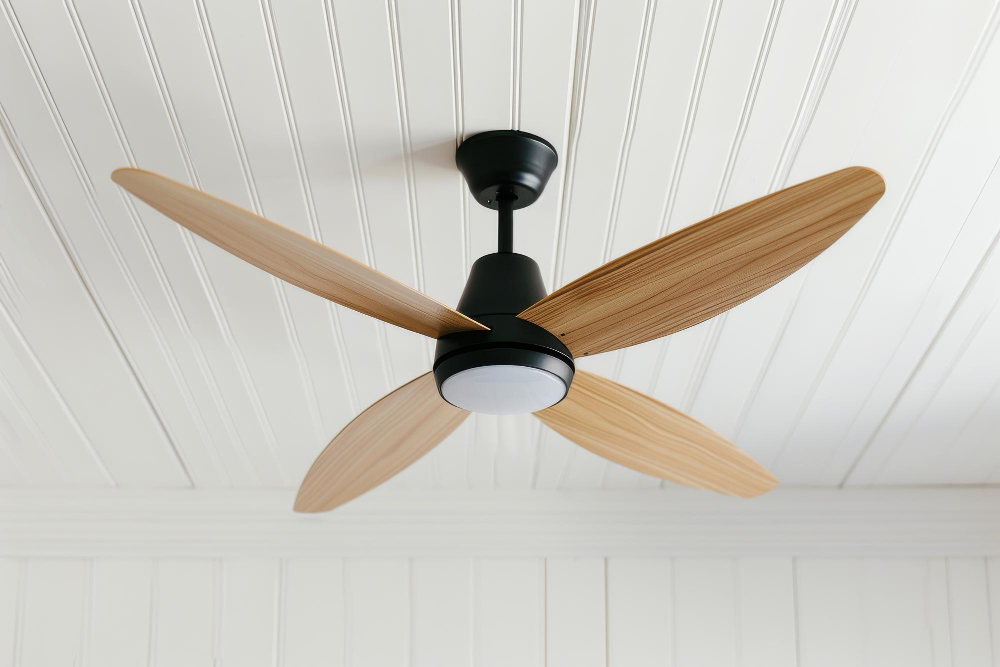
Loose Blade Hardware
Loose blade hardware is one of the first areas to consider when a fan starts clicking or rattling. Blade arms, screws, and visible fasteners can loosen over time because the fan moves every time it runs. That small movement can create a steady tapping sound that becomes more noticeable at higher speeds. You may also hear uneven rattling when the fan changes speed or starts from a stop. The right fix depends on whether the parts are loose, worn, bent, or no longer holding correctly. Since a ceiling fan is mounted overhead and connected to electrical power, persistent noise should be checked by a qualified professional before heavy use continues safely later.
Unbalanced Fan Blades
A fan that wobbles while running often has uneven blade weight or blade alignment. Even a slight difference between blades can make the motor work harder and create a repeating vibration through the fixture. Warped blades, dust buildup, loose blade arms, or age-related wear can all affect balance. You may notice the sound more at medium or high speed because the movement becomes stronger. The right repair path usually starts with a careful inspection of blade condition, mounting support, and overall fan stability. Since wobbling can place stress on the ceiling box and electrical connections, a professional check is the safer way to correct the issue before damage spreads into larger safety concerns.
Dust Buildup
Over time, a thin layer of buildup can change how smoothly each blade moves through the air. Extra weight on one blade may seem minor, yet it can throw off balance and lead to wobbling, rattling, or low vibration. Dust can also collect around the motor housing and make the fan sound strained while it runs. A regular cleaning routine helps reduce this issue, but noise that continues after cleaning may point to another problem. That is the point where guessing can become risky. A professional can check whether the fan is only dirty, poorly balanced, loosely mounted, or showing signs of motor wear that need proper attention.
A Loose Ceiling Mount
Movement near the ceiling should always be taken seriously because the fan depends on proper support above the fixture. A loose mount, weak bracket, or ceiling box that is not rated for fan support can cause shaking, rattling, and visible swaying. You may notice the canopy moving, a vibration traveling into the ceiling, or a dull knocking sound as the fan runs. This type of issue needs more than a surface-level look because the support point carries the weight and motion of the fan. The safest fix is a professional inspection of the ceiling box, mounting hardware, and electrical connection area. A secure fan should run smoothly without making the ceiling around it move.
Loose Light Kits or Covers
Small fixture parts can make a surprising amount of sound when a fan is in motion. Glass shades, light kits, decorative covers, and canopy pieces may rattle when vibration travels through the fan body. You may hear a sharp buzzing, soft clinking, or repeated tapping near the light area. Sometimes the sound appears only at one fan speed because that speed creates the strongest vibration. The right fix starts with identifying whether the noise comes from the fan blades, fixture parts, or electrical components inside the assembly. Ongoing rattling around a light kit should be inspected professionally, especially when the fan also has flickering lights or inconsistent operation.
Pull Chains Or Small Parts
A rhythmic clicking sound can come from a pull chain, connector, or small loose part tapping against the fan while it spins. This type of noise may seem harmless at first because it can sound light and consistent. Still, repeated tapping can make it harder to tell whether another issue is developing inside the fixture. You may notice the sound changing when the fan speed changes or when air movement shifts the chain. The safer fix is to have the fan inspected when the tapping continues, especially if you also notice wobbling, rattling, or humming. A small sound can sometimes point to a larger stability or fixture concern.
Wrong Wall Controls
That low humming sound may be coming from the way the fan is being controlled rather than the fan blades themselves. Ceiling fan motors need controls that are designed for fan speed regulation, not standard light dimming. A mismatched wall control can create buzzing, humming, uneven speed changes, or strain on the motor. You may notice the sound more when the fan runs at a lower setting or when the control feels inconsistent. The right fix is to have the switch, fan control, and wiring reviewed by a qualified electrician. A properly matched control helps the fan run more smoothly and reduces stress on the motor and connected electrical parts.
Motor Wear
Deep buzzing, grinding, or scraping usually points to a problem inside the fan rather than a loose part on the outside. The motor may be worn, strained, overheated, or affected by aging internal components. This kind of sound can become more noticeable after the fan has been running for several minutes. You may also notice slower rotation, uneven speed, or a fan that feels less stable than it used to be. The safest fix is to stop relying on the fan until the motor and fixture can be checked by a professional. A motor-related noise should be treated as a repair concern before the fan becomes unsafe or stops working completely.
Wiring or Capacitor Problems
Persistent buzzing, humming, flickering, or inconsistent fan speeds may point to an electrical issue inside the fan system. Wiring concerns, loose internal connections, or a failing capacitor can affect how power moves through the fixture. You may also notice a burning smell, a warm switch plate, a tripped breaker, or fan speeds that no longer respond correctly. These signs should never be ignored because ceiling fans combine moving parts with electrical components above your living space. The safest fix is to stop using the fan and schedule professional electrical service. Proper testing can confirm whether the issue comes from wiring, controls, the capacitor, or another connected part.
Let Us Help Keep Your Ceiling Fan Running Safely
Fan noise can come from several places. Some sounds may seem minor at first, but a ceiling fan hangs overhead and depends on safe electrical connections, proper support, and steady operation. Paying attention to the type of noise helps you understand whether the concern is simple movement, fixture vibration, or a deeper electrical issue.
At B-TEC Electric, we help homeowners with residential electrical services that support safer, quieter, and more reliable ceiling fan operation. Our services include ceiling fan installation and repair, outlet and fixture installations, electric wiring upgrades, lighting repair, circuit breaker repair, and smoke detector installation. With our experience, knowledge, USMC background, and local reputation as a Nextdoor Fave for the last three years, we bring trusted support to homes across Morris and Sussex County.
Contact us today to schedule ceiling fan service or another residential electrical repair with our team.
FAQs
Why is my ceiling fan making a clicking noise?
A clicking noise can come from loose blade hardware, a pull chain, a light kit, or small fixture parts tapping while the fan runs. The sound may become more noticeable at higher speeds. Since the fan is mounted overhead and connected to power, ongoing clicking should be checked professionally.
Is a humming ceiling fan dangerous?
A light hum may come from normal motor operation, but loud or persistent humming can point to a wrong wall control, wiring issue, capacitor problem, or motor strain. You should stop using the fan if the hum comes with flickering lights, a warm switch, a burning smell, or inconsistent speeds.
Should I replace or repair a noisy ceiling fan?
That depends on the cause, age, condition, and safety of the fan. Loose fixture parts or control issues may be repairable, while worn motors, poor mounting, or aging components may make replacement a better option. A qualified electrician can inspect the fan and recommend the safer path.