Quick Summary
Installing a home EV charger in New Jersey often involves more than choosing charging equipment. Permit and inspection requirements may apply when the project includes new wiring, a 240 volt circuit, a direct connection, breaker work, or panel changes. A licensed electrician can review your panel capacity, outlet condition, wiring, charger type, and installation location so your home charging setup is safe, practical, and ready for daily use.
Bringing EV charging into your New Jersey home can make daily driving easier, but the installation decision deserves careful planning. If you are asking, “do I need a permit to install an EV charger in my NJ home,” the answer depends on your charger type, outlet setup, wiring, and local construction office requirements. A faster Level 2 charger may involve a 240 volt circuit, panel review, or new electrical connection. Before work begins, it helps to understand how permits, inspections, and safe residential electrical planning fit together.
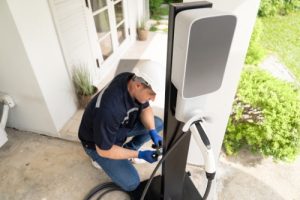
Home EV Charging Is More Than a Simple Plug-In Upgrade
A wall mounted unit can look like a small home upgrade, yet the electrical load behind it deserves serious attention, especially as EV models become more common across local neighborhoods. Standard Level 1 charging may use an existing household outlet and charge slowly over time. Faster Level 2 charging usually works through a 240 volt circuit and can draw power for several hours. That steady demand affects breaker size, wiring condition, panel capacity, outlet rating, charger placement, and available service.
Before equipment is selected, your home’s electrical system should be reviewed against the charging speed you want. A proper review helps reduce overheating risks, nuisance breaker trips, poor charging performance, and expensive corrections after installation inside your New Jersey home.
What New Jersey Looks at Before Electrical Work Begins
Early in the project, the local construction office may need to review how residential charger work changes your electrical system. New Jersey guidance treats many charger installations as electrical work when a new outlet, new wiring, direct connection, or 240 volt circuit is involved. These projects are commonly handled under electrical permit rules and may qualify as minor work with inspection still required.
Municipal requirements can vary, so the local office remains the final point for paperwork, timing, forms, and final approval. This process gives homeowners a safer installation path, helps the project move through the correct municipal channel from the start, and creates a clear record of approved work. That record can help during future service calls, insurance questions, or a property sale later.
Installation Situations That Commonly Require Approval
A project often enters the approval process when the charger needs a new 240 volt outlet, dedicated circuit, or hardwired electrical connection. Similar review may apply when the project calls for breaker replacement, panel changes, fuse box upgrades, or new wiring from the panel to the charging location. Outdoor placement can add requirements for weather rated equipment, protected wiring, proper mounting, and safe routing.
Moving a charger to a new location may also trigger paperwork if new electrical work is needed. When the installation changes how power reaches the charger, a permit and inspection should be expected. Level 2 charging often falls into this category for New Jersey homeowners, especially when faster charging speed is needed for daily commutes or multi vehicle households at home.
When the Process May Be Simpler for an Existing Outlet
In a limited set of situations, the permit path may be simpler when the right outlet already exists in the right location. New Jersey guidance allows some outlet configuration changes to be treated as ordinary maintenance when the outlet is already properly sized for the charger. A matching plug should never be treated as proof that the circuit is safe. Older outlets may be loose, worn, undersized, or connected to wiring that was never intended for long charging sessions.
Panel capacity can also be tight when major appliances already draw significant power. Since a quick visual check from a homeowner is rarely enough, a qualified electrician can review the outlet, breaker, wiring, panel, and charger specifications before you rely on that setup, and explain whether local permit steps apply locally.
Why Inspection Protects Your Home, Charger, and Vehicle
After the electrical work is completed, inspection gives a code official the chance to confirm that the visible installation meets safety requirements. A charger can run for hours, so the circuit must be sized properly for sustained use and protected by the right equipment. The review can catch mismatched breakers, weak connections, unsafe wiring, missing protection, or panel concerns before they become long term problems. It also creates documentation that can support insurance questions, future repairs, home resale, or warranty documentation.
Clean records make it easier for another electrician to understand what was installed later. For daily charging, this added review gives you more confidence that the vehicle, charger, and home electrical system are working together safely instead of leaving the system to guesswork later.
What Homeowners Should Expect Before Installation Day
A clear plan usually begins with a careful electrical review of your home and your overall usage plan rather than a quick product placement decision. An electrician checks panel capacity, existing breakers, wiring condition, and the distance from the panel to the charging location that may affect the charger. The review also covers charger type, charging amperage, equipment label information, plug-in or hardwired setup, and indoor or outdoor placement.
Some homes can support a straightforward circuit installation. Others may need panel adjustments, wiring upgrades, or a different location to keep the setup practical and safe under daily use. You should also expect questions about your daily driving distance, parking location, garage layout, current electrical needs, and charging schedule, so the final plan fits your routine without last minute changes.
Charge at Home with Confidence in New Jersey
A home charger can make EV ownership more convenient, but the installation should match your electrical system, rules, and daily charging needs. In New Jersey, permit and inspection steps often apply when new wiring, a 240 volt circuit, direct connection, breaker work, or panel changes are involved. The safest path starts with a clear electrical review before installation.
At B-TEC Electric Company, we help Morris and Sussex County homeowners plan residential EV charging with practical guidance and professional work. Our residential services include EV charging station installation, panel changes, fuse box upgrades, breaker box installation, circuit breaker repair, electric wiring upgrades, exterior outlets, and rewiring or new wiring to support your portable generator. We focus on safe, practical, code conscious installation that fits your home and routine.
Schedule an appointment today. We are ready to help you plan your NJ home charging project with confidence.
FAQs
Do I need a permit for a Level 2 EV charger in New Jersey?
In many cases, yes. A Level 2 EV charger often needs a 240 volt circuit, new wiring, a dedicated breaker, or a direct electrical connection. Those changes usually bring the project under local electrical permit and inspection requirements. Your local construction office and a licensed electrician can confirm what applies to your home before work begins.
Can I use an existing outlet for my EV charger without a permit?
Sometimes, the process may be simpler if the outlet is already properly sized, safely installed, and compatible with your charger. However, a matching plug does not prove the circuit is safe for long charging sessions. A licensed electrician should check the outlet, wiring, breaker, and panel capacity before you rely on that setup.
Why should an electrician inspect my panel before EV charger installation?
Your panel must have enough available capacity to support the charger along with your existing electrical load. An electrician can review breaker space, wiring condition, charger amperage, and installation location before work starts. This helps create a safer charging setup and can show whether upgrades, permit paperwork, or inspection steps may be needed.