Quick Summary
A professional installation opens with a site walkthrough and a load calculation, since a charger counts as a continuous load and calls for a circuit sized at 125 percent of its maximum current. Level 2 equipment on 240-volt service suits most households, while the choice between hardwired and plug-in units changes the requirements for disconnects and ground-fault protection. A dedicated circuit then runs from the panel to the parking spot with conductors matched to the breaker and conduit rated for outdoor exposure. New Jersey treats any new 120- or 240-volt outlet as minor work, so notice to the local code office, a permit application within five business days, and an inspection all apply. Torqued terminations, verified ground-fault protection, and a live test charge close out the job.
Driveways across Morris and Sussex Counties look different than they did five years ago. Electric vehicles now sit where sedans and pickups once parked overnight, and their owners quickly discover that charging speed depends on what happens inside the walls of the house. Home EV charger installation sits at the meeting point of vehicle technology, residential wiring, and New Jersey code enforcement. Each of those three areas carries its own set of rules that a homeowner rarely sees. Here is what really goes on behind a professional installation, step by step.
What Happens Before Anyone Touches a Wire
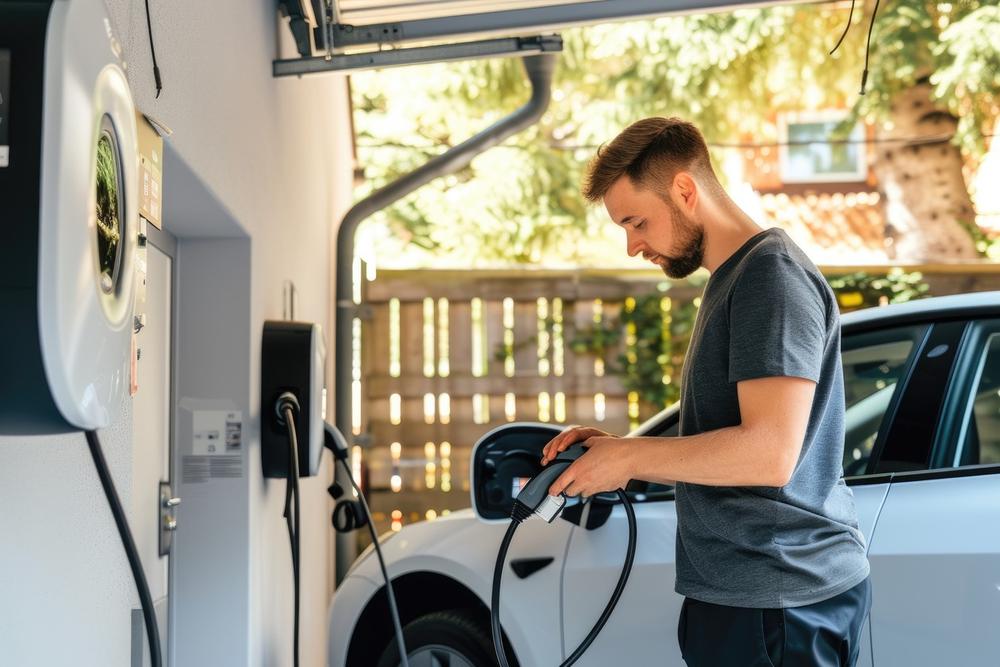
Every quality installation opens with a conversation and a walkthrough rather than a toolbox. Your electrician needs to see where you park, how far that spot sits from the service panel, and whether the run passes through finished drywall, an unfinished basement ceiling, or an exterior wall. Garage installations differ from carport and driveway installations, since outdoor equipment faces rain, road salt, and winter temperature swings that indoor units never meet. Existing 240-volt circuits get checked as well, and the U.S. Department of Energy advises having a licensed electrician confirm that any current 240-volt outlet is safe for vehicle charging. Your driving habits enter the discussion too, since daily mileage shapes the amperage you will want. All of that information gets gathered and recorded before a single price ever reaches your inbox.
Reading Your Panel and Running the Load Calculation
Capacity is the next question, and it gets answered with arithmetic rather than guesswork. A charger draws current for hours at a stretch, which places it in the category of a continuous load under Article 625 of the National Electrical Code. That classification requires the circuit to be sized at 125 percent of the equipment’s maximum current, so a 40-amp unit needs a 50-amp circuit. Your electrician adds that figure to the existing demand from heating, cooking, laundry, and air conditioning to see what your service can carry. Homes with 100-amp service and several electric appliances often come up short. A service upgrade or a lower-amperage charger then becomes part of the plan you approve.
Matching the Charger to Your Vehicle and Your Daily Driving
Two levels of charging exist for residential use, and the difference between them is measured in hours. Level 1 uses the cordset that came with the car and a standard 120-volt receptacle, which suits plug-in hybrids and short commutes. Level 2 runs on 240-volt service, and according to the Alternative Fuels Data Center, most residential units operate at up to 30 amps and deliver 7.2 kW, enough to refill a typical battery overnight. Selection then moves to the equipment itself, since hardwired units and plug-in units carry different requirements for disconnects and ground-fault protection. Weather rating enters the choice for anything mounted outside. Your vehicle’s onboard charger sets the ceiling, so paying for amperage the car cannot accept adds cost without adding speed.
Pulling a Dedicated Circuit From the Panel to the Parking Spot
Wiring the run is where the trade shows itself. A charger requires its own branch circuit, and sharing that circuit with a dryer outlet or a garage receptacle falls outside code. Conductor size follows the breaker rating, the wiring method, and the temperature rating of the terminals, so a 50-amp circuit calls for heavier copper than most homeowners expect. Routing takes planning, since the path may cross joists, masonry, insulation, or an attic that reaches high summer temperatures. Outdoor sections need conduit rated for wet locations and proper support along the way. Extension cords never belong in this picture, and the Department of Energy warns that charging cables carry thicker conductors than typical cords, so substituting one raises the risk of fire, overheating, and shock.
Permits and Inspections Under the New Jersey Construction Code
State oversight follows a clear structure, and the New Jersey Department of Community Affairs spells it out. Swapping a correctly sized outlet for one with a compatible plug configuration counts as ordinary maintenance, so no permit and no inspection apply. Installing a charging system that calls for a new 120- or 240-volt outlet, or a line connected directly to the equipment, falls under minor work and requires both. Work may begin before the permit is issued, though the local code-enforcing agency must be notified first and the application filed within five business days of that notice. An inspector then reviews the installation within three business days of receiving notice that the work is complete. Your contractor handles that paperwork on your behalf.
Mounting, Energizing, and Verifying the Finished Installation
Placement gets decided with everyday use in mind, so the unit sits at a comfortable height and the cable reaches the vehicle port without strain or tension. Terminations are torqued to the manufacturer’s specification, since loose connections generate heat over time. Ground-fault protection gets verified next, whether the equipment provides it internally or a breaker supplies it at the panel. A test charge confirms that the vehicle and the equipment communicate properly and that the circuit holds steady under a sustained draw. Voltage readings, breaker labeling, and neat cable management round out the visit before anyone packs up. You should also receive a walkthrough covering scheduled charging, amperage settings, and what to watch for during the first few weeks of use.
Ready to Charge in Your Own Driveway?
A charger on the wall represents the last visible step of a process built on calculation, code compliance, and careful workmanship. The quality of that hidden work decides whether your car charges safely every night for the next decade. Homeowners who treat the installation as electrical work rather than an appliance purchase end up with a system that performs the way the manufacturer intended.
At B-TEC Electric Company, we have wired New Jersey homes since 1993, and our licensed team handles EV charger installation from the load calculation through the final inspection. We also take care of panel upgrades and service changes for homes that need extra capacity first, along with outlet installation, recessed lighting, and wiring for portable generators. Free estimates come standard, and roughly 80 percent of our work comes through repeat customers and referrals.
Call us at 973-347-7337 or send a request through our contact form, and we will schedule a visit at your convenience.
FAQs
Do I need a permit to install an EV charger in New Jersey?
Yes, in most cases. The Department of Community Affairs classifies any charging system needing a new 120- or 240-volt outlet as minor work, which requires a permit and an inspection. Work can start once the local code office receives notice, though the application has to be filed within five business days and an inspection follows.
Can I plug my charger into an existing dryer outlet?
That shortcut fails on two counts. A charger requires its own dedicated branch circuit, and a dryer receptacle is usually wired for a lower rating than a Level 2 unit draws for hours at a time. An electrician can confirm whether an existing 240-volt outlet is safe or size a new circuit instead.
Will my electrical panel handle a Level 2 charger?
Only a load calculation answers that. Existing demand from heating, cooking, laundry, and air conditioning gets added to the charger rating at 125 percent, then compared against your service size. Homes with 100-amp service and several electric appliances often need a service upgrade first, while a lower-amperage charger sometimes solves the problem.