Quick Summary
A wobbling ceiling fan can point to blade imbalance, damaged blades, loose hardware, poor installation, weak support, motor trouble, or wiring concerns. Strong shaking, movement near the ceiling, flickering lights, odd sounds, or a warm smell should be treated as warning signs. Since ceiling fans combine overhead weight, motion, and electrical connections, the safest step is to stop using the fan and schedule a professional inspection.
A wobbling ceiling fan can make you look up and wonder whether the problem is minor or something more serious. Is it only out of balance, or is the fan moving because something above the ceiling is loose? That shake can come from blade issues, weak support, poor installation, loose parts, or electrical concerns. Since your ceiling fan sits overhead and connects to your home’s wiring, it should be handled with caution when something feels off.
Let’s look at the top reasons a fan may wobble and the safest next steps for your home.
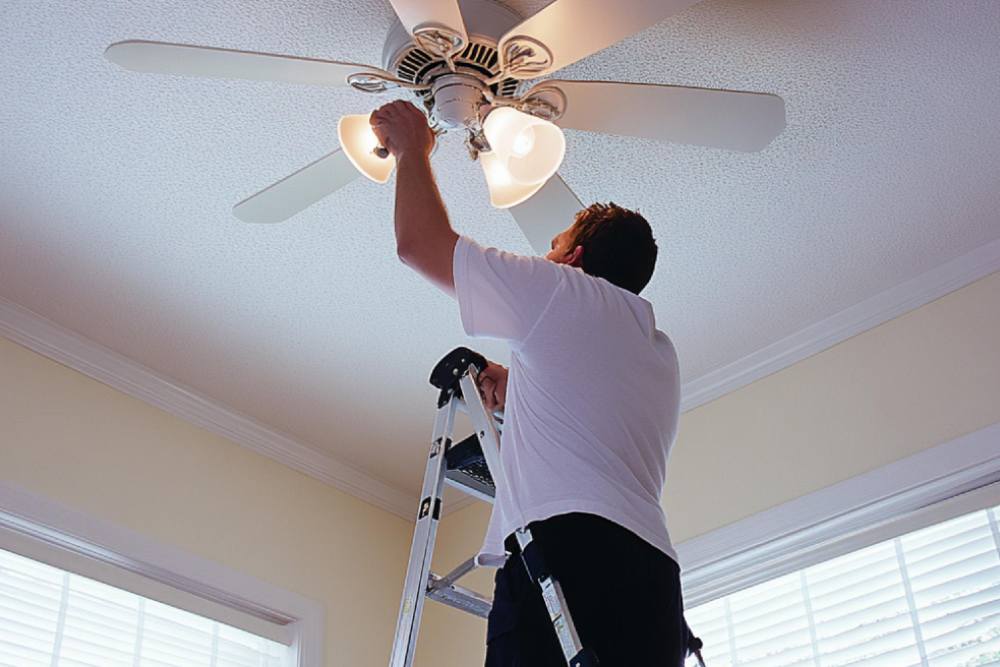
Why a Wobbling Ceiling Fan Should Not be Ignored
Small movements can feel harmless at first, especially when the fan still runs, and the room stays comfortable. Yet wobbling often means one part of the fan is no longer working in balance with the rest of the fixture. That uneven movement can place added stress on blade arms, mounting points, screws, and internal components. Over time, a minor shake can become louder, wider, or more noticeable at certain speeds.
A fan that moves near the ceiling deserves closer attention because support issues can affect safety. Rattling, grinding, or visible shifting may signal that the fan should be turned off until it is inspected. Wobbling can also shorten the fixture’s life because repeated vibration wears parts faster.
Loose Mounting or Improper Ceiling Support
Strong overhead support matters because a ceiling fan carries weight while it spins, vibrates, and changes speed. A standard light fixture box may look secure, but it may not be rated to hold a moving fan. Over time, weak support can allow the fan to shift, especially near the canopy or downrod. You may notice movement where the fan meets the ceiling, which can feel more concerning than a small blade shake. That type of motion should be taken seriously because the issue may be above the visible fixture.
Proper repair usually starts with a professional inspection of the ceiling box, mounting bracket, downrod, canopy, and support point. A qualified residential electrician can confirm whether the fan is attached to fan-rated hardware and supported correctly. If the original setup is not suitable, the safest resolution may involve correcting the mounting support before the fan is used again. This helps restore stable operation while protecting the ceiling area and fixture connection.
Unbalanced Fan Blades
A smooth fan needs each blade to move with the same weight, angle, and spacing. Even a small difference can create shaking because the motor is trying to spin an uneven load. This may happen after years of use, after a fan has been bumped, or when one blade sits slightly higher or lower than the others.
Dust can also collect unevenly across the blade surfaces, which may make the motion worse at medium or high speeds. You may notice that the fan looks steady when it starts, then begins to wobble as it speeds up. This type of issue is usually resolved through professional blade alignment checks, balancing, or part adjustment.
A trained technician can test the fan safely and determine whether the blades, blade arms, or related parts need correction. That way, the fan can return to quieter and steadier operation without unnecessary guessing.
Warped, Bent, or Damaged Blades
Damaged blades can change how a fan moves, even when the mounting point is secure. Moisture, age, heat, accidental impact, or low-quality replacement parts can cause a blade to sag, bend, crack, or sit at a slightly different pitch. Once that happens, the fan may pull unevenly during rotation and create a steady wobble.
This problem can become more noticeable in bathrooms, kitchens, sunrooms, or other spaces where humidity and temperature changes affect materials. A blade that looks twisted, chipped, or lower than the others should be treated as a warning sign. Repair often depends on the condition of the blade and the fan model.
A professional can inspect the blades and blade arms, then decide whether matched replacement parts can restore balance. If the damage affects safety, fit, or long-term reliability, a new fan installation may be the better resolution for your home’s needs and everyday comfort.
Loose Hardware or Fixture Connections
Rattling sounds often come from small parts that have shifted out of place over time. Blade arms, light kits, pull chain housings, canopy pieces, and visible fixture connections can loosen as the fan runs through repeated speed changes. Even slight movement in one area can travel through the fixture and make the whole fan appear unstable. You may hear clicking, tapping, or buzzing before the wobble becomes obvious. A loose light kit can also make the fan shake differently from a fan that has only blade balance issues.
Poor Installation or Wrong Fan Placement
A fan that has wobbled from the first day may be dealing with an installation or placement problem. Room size, ceiling height, blade clearance, downrod length, and ceiling angle can all affect how steady the fan feels during operation. A fan installed too close to walls, beams, cabinets, or sloped surfaces may struggle to move air evenly. Incorrect hardware can also create movement because the fixture is not seated the way it should be. Even a quality fan can shake when the setup does not match the room.
Placement concerns are usually resolved by having the installation reviewed from top to bottom. A professional can check whether the fan is the right size for the space, whether the downrod fits the ceiling height, and whether the mounting hardware supports safe operation. If the original installation is the source of the wobble, correcting the setup or reinstalling the fan properly can restore safer, smoother performance.
Motor, Wiring, or Electrical Concerns
Unusual movement can sometimes point past the blades and into the parts that power the fan. A worn motor, unstable speed control, loose internal connection, or aging wiring can change how the fixture runs. You may notice humming, grinding, flickering lights, speed changes, a warm smell, or an operation that feels inconsistent. Those signs should be treated with care because they involve both moving parts and electrical connections. A fan that wobbles while making new sounds may need more than a balance correction.
Safe resolution begins with a licensed electrical inspection, especially when the fan shares power with a light kit, wall control, or older wiring. A qualified professional can evaluate the wiring, fixture connections, switch operation, and motor behavior before recommending repair or replacement. This step helps identify whether the fan can be corrected safely or should be replaced.
Warning Signs That Mean You Should Stop Using the Fan
A warning sign matters most when the wobble changes from mild movement to clear instability. If the fan looks unsafe, shut it off and leave it off until it can be inspected. Pay attention to what you see, hear, and smell because those clues can point to support, motor, wiring, or fixture problems.
- Strong shaking that makes the fan look like it may pull away from the ceiling
- Movement near the canopy, downrod, or ceiling connection point
- Loud rattling, clicking, scraping, grinding, or buzzing during operation
- Flickering lights connected to the fan or light kit
- A warm, burning, or electrical smell near the fixture
- Visible sagging, crooked hanging, cracked blades, or loose-looking parts
- Wobbling that suddenly gets worse or changes at certain speeds
These signs should not be treated as normal fan behavior. A ceiling fan sits overhead and connects to your home’s electrical system, so continued use can increase risk when something is already moving incorrectly.
What to do When Your Ceiling Fan Starts Wobbling
When a fan starts shaking, the safest response is to treat it like a warning instead of a small annoyance. Turn the fan off, let the blades stop fully, and avoid using it again until the cause is known. A wobble can come from balance issues, but it can also point to mounting, hardware, wiring, or motor concerns. Because the fan is overhead and connected to power, repair work should be handled by a qualified professional.
You can still take helpful, safe steps before making the service call.
- Notice whether the wobble happens at one speed or every speed
- Pay attention to new sounds, flickering lights, odors, or ceiling movement
- Look from a safe distance for crooked hanging, sagging blades, or visible shaking
- Avoid touching wiring, removing covers, adjusting parts, or working above your head
- Keep children, pets, and furniture away from the fan area if the movement looks severe
- Schedule an inspection before the fan is used again
Clear details can help the electrician understand what you noticed. Mention when the wobble started, whether the fan was recently installed, and whether the movement changed over time. This helps narrow the cause without asking you to troubleshoot unsafe parts.
Keep Your Ceiling Fan Steady, Safe, and Ready for Everyday Use
At B-TEC Electric, we help homeowners in Morris and Sussex County with residential electrical services that support safer, more dependable home comfort. Our team can assist with ceiling fan installation and repair, outlet and fixture installation, lighting repair, electric wiring upgrades, and related home electrical needs. We bring experience, knowledge, and a careful residential focus to every service call. As a USMC veteran-owned company and a Nextdoor Neighborhood Fave for the last three years, we take pride in doing careful work for local homeowners.
Contact us today to schedule ceiling fan service or another residential electrical project. We are ready to help you keep your home safe, comfortable, and properly powered.
FAQs
Why is my ceiling fan wobbling?
A ceiling fan may wobble because of blade imbalance, loose hardware, weak ceiling support, damaged blades, poor installation, motor trouble, or wiring concerns. Strong movement near the ceiling should be taken seriously because it may involve the mounting point or fixture support.
Is it safe to keep using a wobbly ceiling fan?
It is best to stop using the fan if the wobble looks severe, gets worse, or comes with rattling, grinding, flickering lights, sagging, or a warm smell. Continued use can place more stress on the fan, ceiling area, and electrical connections.
Who should I call for a wobbly ceiling fan?
A licensed residential electrician is the right professional to call when a fan wobbles, especially if the issue may involve mounting, wiring, fixture connections, or installation quality. Professional inspection can identify the cause and recommend a safe repair or replacement.